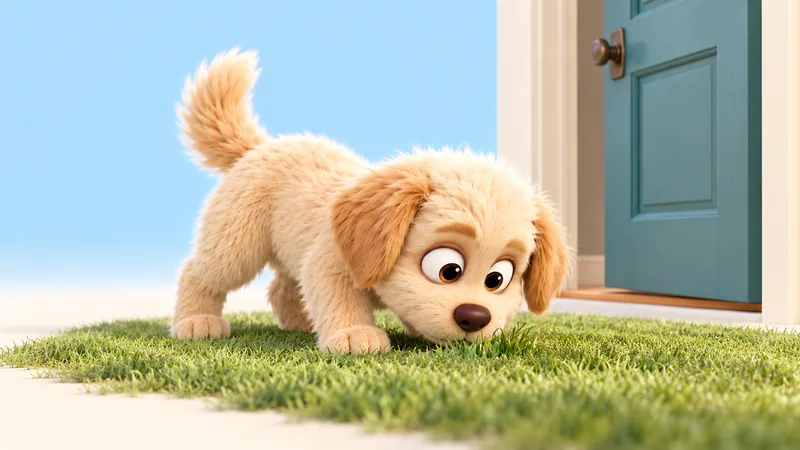
To house train a Labrador puppy, give them frequent opportunities to use one appropriate toilet area, reward them just after they finish there, and supervise closely enough to catch the early signals. Accidents are a reason to adjust the setup, not to punish your puppy. The aim is a repeatable household routine rather than a deadline for being “fully trained.”
This guide is for teaching a toileting habit. A sudden change in an otherwise reliable dog, or discomfort when toileting, deserves veterinary advice rather than a stricter schedule.
Quick Answer
- Choose a safe toilet area and a practical route to it.
- Offer trips around waking, eating, drinking, and active play.
- Stay nearby so you can reward a completed toilet in the right place.
- Use supervision and a comfortable puppy-safe area between trips.
- Record what happened before an accident and adjust the next opportunity.
- Plan night-time breaks and help during absences around your puppy’s actual needs.
- NoticeWaking, meals, play, or a signal
- OfferA trip to the agreed toilet area
- ObserveDid your puppy actually finish?
- RespondReward success; record and adjust
What your puppy is learning
A puppy needs to learn where to go, how to reach that place, and eventually how to communicate a need. These are different skills. A puppy who follows you into the garden has not necessarily learned to find the back door from a bedroom. Likewise, a dry afternoon does not demonstrate that they can wait while you finish a long meeting.
Watch the individual puppy instead of relying on an “age in months plus one hour” formula. RSPCA guidance highlights frequent opportunities and signs such as restlessness, sniffing, and circling. Those observations are more useful than trying to prove that your Lab should already have more control.1
Decide what counts as success before you start. “We reached the toilet spot after a nap” is specific. “Be good indoors” is not something a puppy can interpret. For an owner, the first useful improvement may be noticing a signal earlier, even before the accident count changes.
Six steps for a workable house-training routine
1. Make the right place easy to reach
Choose an appropriate, accessible location. For some homes this is a quiet corner of a secure garden; for others it is an agreed indoor toilet area while outdoor access is being arranged. Ask your veterinarian which outdoor places are appropriate for your puppy’s vaccination status and local disease risk. Do not assume a busy shared dog area is suitable for every young puppy.
Walk the route without your dog and notice the delays: a locked door, shoes upstairs, a lift, or a lead buried in a drawer. Put the practical items where you need them. Someone living on the fourth floor needs a different exit plan from someone beside an open garden door.
Keep the route predictable. A family note can be very simple: “After waking, use this door and this area.” That prevents one person waiting at the front door while another expects the puppy to head for the kitchen. An accessible route also matters for a new adult dog learning your home.
2. Plan around transitions, then observe
Use changes in activity as reminders. Waking up, finishing a meal, drinking, and ending an energetic game are useful points to offer a trip. Blue Cross describes building a regular routine and gradually adjusting it as the puppy develops.2
A timer can remind you to look at the puppy, but it should never override a clear signal. If your Lab interrupts a game to search along the skirting board, respond rather than waiting for an alarm. If a trip was unsuccessful, keep the puppy close and be ready to offer another opportunity.
Assign responsibility during handovers. Before one person goes to work, they can say, “They woke up ten minutes ago and haven’t toileted yet.” That is more useful than both adults assuming the other person handled it. A note on the fridge or a shared phone note is enough; you do not need an app to begin.
3. Be present for the successful moment
Go with your puppy. Give them a quiet opportunity to investigate the chosen area without turning every visit into an exciting game. Stay attentive so you know whether anything actually happened. A puppy disappearing into the garden and returning is not the same as an observed toilet trip.
Once they have finished, acknowledge the success promptly. RSPCA recommends rewarding successful toileting while you are still in the right place. Waiting until you return indoors makes it harder to connect the reward with the action you wanted.1
Have any small food reward ready in a pocket rather than searching through a bag while the puppy wanders away. Use food suitable for your dog and include training rewards in their overall feeding plan. Calm praise can accompany the reward. Avoid interrupting the puppy halfway through to celebrate.
You can record “observed success” in your log. This small distinction helps identify whether a later accident followed a genuinely successful trip or merely a few minutes outside.
4. Match indoor freedom to supervision
Think in terms of what you can actually watch. Supervising a puppy while answering emails in another room is usually just hoping. Choose a manageable area where you can notice movement and respond, and use puppy-safe barriers when needed.
A comfortable rest area is useful, but confinement is not a way to make a puppy hold on beyond their ability. VCA describes combining supervision, appropriate confinement, and a plan for toilet opportunities; it also warns against punishment for accidents.3
If you use a crate, introduce it positively and ensure it fits your dog comfortably. Do not use distress or repeated soiling as a reason to make the space smaller or leave the puppy longer. Arrange help, a different safe setup, or professional guidance when your schedule and the puppy’s needs do not match.
As things improve, change one part of the setup at a time. For example, supervise access to one additional room before opening the whole house. This makes a setback easier to understand: you know what changed and can return to the earlier arrangement.
5. Treat accidents as information
If you notice the puppy preparing to go indoors, guide them calmly toward the appropriate area if you can do so without frightening them. If you discover an accident afterwards, simply clean it up. Scolding cannot explain where the toilet should have been, and may make the puppy wary of toileting near you.1
Use a pet-safe cleaner intended for the affected surface and follow its directions. Keep the puppy away while cleaning and until the area is safe to use again. Avoid turning cleanup into a chase game with a cloth. VCA recommends an enzymatic cleaner to address the remaining odor.3
Then write one useful sentence: “Accident after visitors arrived; no trip after the excitement.” Compare that with “He knows better,” which gives you nothing to change tomorrow. A log is for adjusting the environment, not assigning blame to the dog or the person who missed a signal.
6. Make a separate plan for nights and absences
An overnight plan should answer practical questions: who will hear the puppy, who can take them out, and what happens if they need to go earlier than expected? Prepare a light, footwear, and a safe route before bed. Keep a necessary night trip calm so it does not become a long play session.
Do not assume that one dry night establishes a permanent new limit. If the puppy wakes and seems to need a toilet opportunity, respond. Review patterns over several nights rather than treating a single night as a test they must pass again.
For daytime absences, arrange suitable care instead of expecting a puppy to fit a full working day without help. An agreed indoor toilet area can be part of a temporary management plan when needed; it should be distinct from the resting and feeding area. The plan should explain how you will move toward your eventual toileting arrangement, rather than changing the rules unpredictably.
A sample day without a rigid clock
This is an example for organizing responsibilities, not a prescription for how long your puppy can wait. Add opportunities whenever their signals or circumstances call for them.
| Moment | Owner’s next action |
|---|---|
| Puppy wakes | Offer a toilet trip before starting another activity. |
| Meal or active play ends | Check for signals and offer the planned opportunity. |
| Back inside | Record whether toileting happened; choose supervision or a safe rest setup. |
| Household handover | Tell the next person when the puppy last went and what happened. |
| Before bed | Prepare the night route and agree who will respond. |
Leave water available. Do not try to produce a dry floor by restricting drinking unless your veterinarian has given individual medical instructions. Blue Cross’s puppy-care guidance emphasizes access to fresh water.4
Troubleshooting common situations
Your puppy toilets as soon as you come indoors
Check whether you saw a completed toilet outside or only sniffing and play. Make the next outing quieter, remain nearby, and supervise closely after an unsuccessful trip. Write down the sequence so you can see whether excitement or a rushed return is a recurring factor.
Accidents happen in one particular room
Look at access and supervision rather than assuming the puppy prefers to disobey there. Is that room where they disappear from view? Is the surface similar to an indoor toilet area? Temporarily reduce access, clean appropriately, and reintroduce the room under supervision. Battersea discusses surface preferences and the value of adapting the setup to the individual dog.5
Training changes at another person’s home
Treat a new home as a new route to learn. Show the puppy the toilet area, supervise, and offer opportunities again. A dog who knows your garden door cannot automatically know which door matters at a holiday cottage.
The puppy uses a pad but misses beside it
Review the size, position, and stability of the designated area. A tiny sliding pad may be difficult to use consistently. Do not spread pads through every room without a clear reason; that can make the intended location less distinct. If you need help transitioning to outdoors, discuss your actual housing setup with a reward-based trainer.
How to recognize progress
Useful signs include noticing signals sooner, more observed toilets in the right place, and a household that anticipates predictable transitions. Track those alongside accidents. “Three successes we saw after naps” tells you which routine is working.
Record the location and context of setbacks. A puppy doing well downstairs may need more supervision upstairs, rather than a completely new method. Compare similar situations: a quiet weekday and a house full of guests are different challenges. When you extend access or change care arrangements, note it so you can interpret the result.
There is no guaranteed completion date. Keep supporting the behavior as your puppy grows, and ask for help when the pattern is not improving rather than escalating punishment.
When to contact your veterinarian
Seek veterinary advice for a sudden change, repeated discomfort, straining, unusual thirst, or persistent accidents despite an appropriate routine. These signs should not be dismissed as stubbornness. Battersea identifies changes in toileting and discomfort as reasons to consult a vet.5
For an adult Labrador who was previously reliable, discuss the change with your vet before treating it purely as a training issue. If medical concerns are excluded, a qualified reward-based trainer or behavior professional can help with the remaining pattern. This article is educational and cannot determine the cause of an individual dog’s accidents.
Frequently Asked Questions
How often should I take my Labrador puppy outside?
Offer frequent opportunities around waking, meals, drinking, and active play, and respond to the puppy’s own signals. Adjust the routine to your individual puppy; an age-based formula is not a guarantee that they can wait.
How long does house training a Labrador take?
There is no fixed completion date. Progress depends on development, health, supervision, and the opportunities available. Look for a growing pattern of successful toileting and gradually extend freedom rather than treating a few dry days as proof that training is finished.
Should I use puppy pads?
A designated indoor toilet area can be a temporary option when outdoor access is difficult. Keep the arrangement clear and separate from rest and food, and plan how to transition if outdoors is your eventual goal. Choose the setup around your home and your puppy’s needs.
Should I wake my puppy for a toilet break at night?
Some puppies need night-time opportunities. Plan around observed patterns and respond if they wake and need to go. Keep the trip quiet, and ask your vet for guidance if you are unsure about your puppy’s needs or see signs of discomfort.
Why does my puppy pee indoors after going outside?
They may not have finished, or the outdoor trip may have become distracting play. Stay with them, record whether toileting actually occurred, and supervise closely after an unsuccessful outing. Persistent or unusual changes should be discussed with a vet.
Should I tell my puppy off for an accident?
No. Clean up calmly and adjust supervision or timing. Punishment does not explain the right location and may make a puppy afraid to toilet near you. Reward successes in the appropriate place instead.
The Bottom Line
Make the right toilet opportunity easy, notice what your puppy actually does, and organize the household around the next opportunity. A calm routine gives you something to repeat and improve. Accident-free hours are welcome, but clear observation and a workable care plan are the foundations you can control.
Related
- Labrador puppy biting — manage another common puppy-stage challenge.
- Loose-leash walking — prepare for calmer outings.
- Recall training — build the habit of returning when called.
- Labrador training hub — choose the next habit to work on.
Sources
- RSPCA. Toilet training. Routine opportunities, recognizing signals, rewards, and avoiding punishment.
- Blue Cross. Toilet training a puppy. Building and gradually adapting a toileting routine.
- VCA Animal Hospitals. House Training for Puppies and Dogs. Supervision, confinement, rewards, and cleanup.
- Blue Cross. Caring for your puppy. Puppy care and access to fresh water.
- Battersea. How to toilet train a puppy or dog. Environmental setup, surface preferences, and reasons to seek veterinary advice.