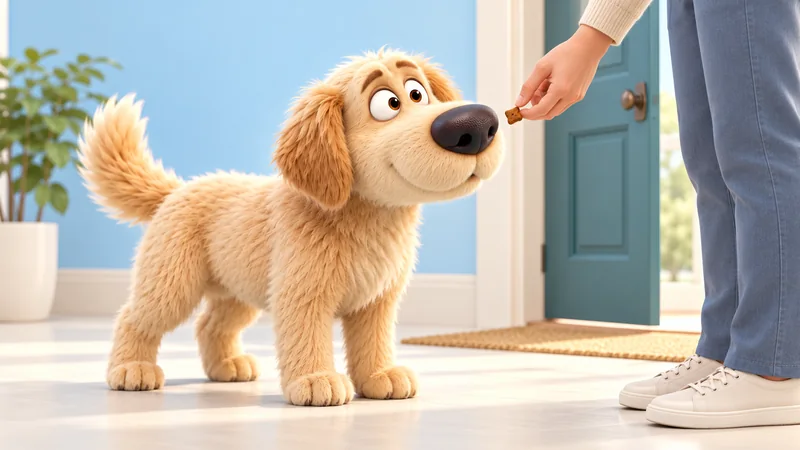
To help your Labrador stop jumping up on people, teach a greeting with four paws on the floor and arrange practice before visitors arrive. Reward the behavior you want, keep early greetings brief, and make the next attempt easier when the dog struggles. Simply repeating “off” leaves the dog without a clear alternative.
This guide is for greetings that you can safely manage. Jumping combined with fear, snapping, painful movement, or forceful grabbing needs individual assessment. A welcoming dog can still knock someone over, so a safe setup comes before a training repetition.
Quick Answer
- Choose a simple goal: a comfortable greeting with four paws on the floor.
- Prepare a quiet practice space and one capable adult helper.
- Reward a successful approach before it turns into a jump.
- Let the helper greet briefly, then step away.
- Practise home arrivals, visitors, and outdoor greetings separately.
- If jumping starts, create space and simplify the next attempt.
Why your Labrador jumps up
Jumping is not always a cheerful hello. Dogs Trust describes several possible drivers, including excitement, frustration, worry, and learned attention-seeking. Understanding the context matters because the same outward movement can require different support.1
Start with a description rather than a label. “Jumps when someone bends over him at the front door” gives you something to investigate. “He is naughty” does not tell you what to change.
For a greeting that appears friendly, notice what follows the jump. Does someone talk, touch the dog, or start a game? AKC explains that these responses can maintain jumping, even when the person’s intention is to discourage it.2
Keep a simple note for a few ordinary arrivals: who came in, where the dog was, and what happened first. You do not need to provoke a jump to collect information. Record situations that occur naturally while keeping everyone safe.
Breed alone does not explain an individual dog’s behavior. Your Labrador’s size, comfort, experience, and current surroundings all affect what you can safely practise.
Set up a greeting you can manage
Choose a quiet room with secure boundaries and good footing. Have small suitable rewards ready, with their food allowance accounted for. Use one adult helper who can follow your instructions and move safely. Children and people at risk of falling should not serve as practice partners.
If necessary, use a secure gate or a comfortably fitted harness and handheld leash to prevent an uncontrolled rush. Equipment should help you create space, not pin the dog down. If you cannot safely handle the dog, start with professional help.
Decide the roles before starting. One person handles the dog and rewards; the other approaches only when invited. This avoids both people reaching for the same treat while the dog tries to follow their hands.
An example preparation note might read: “Kitchen, outside door closed, clear floor, helper by the far doorway, treats in my pocket.” It is more useful than “Practise being calm,” because tomorrow you can recreate the conditions.
Six steps toward calmer greetings
The sequence below is a practical way to organize short sessions. It is not a fixed-day program or a guarantee that every dog will progress at the same pace.
1. Define the greeting before adding a visitor
Standing with four paws on the floor is a clear starting goal. A familiar, comfortable sit is another option. AKC recommends teaching an alternative greeting rather than relying only on ignoring jumps.2
Write one sentence everyone in the household can follow: “We invite a hello when the paws stay down.” Make sure “hello” does not automatically mean petting; the dog should be free to decline contact.
Begin with an ordinary household member already in the room. This separates learning the basic arrangement from the excitement of a real arrival.
2. Rehearse one easy approach
Ask your helper to begin far enough away that the dog can remain comfortable. Have them take a small step closer. Acknowledge and reward the dog while their paws stay down, delivering the food low enough that reaching for it does not require a jump.
The helper can then step away and pause. Repeat only while the dog remains able to participate comfortably. If a small approach already causes a rush, increase distance or stop to reconsider the setup.
For example, you might begin with the helper moving between two floor tiles rather than walking all the way across the room. Those tiles give both people a consistent reference. There is no need to measure a universal “correct” starting distance.
3. Add a brief greeting
When the approach is manageable, try a short hello. Keep your helper’s movement predictable and let the dog choose whether to approach. End while the greeting is still easy.
VCA recommends deciding what the desired greeting should look like and teaching that response in controlled practice.3 Here, the useful outcome is a greeting you can repeat, not how long you can stretch it.
Your first note might be: “Helper came close, said hello, then moved away; paws stayed down.” Later you can record whether a small extra movement was manageable. Avoid adding several unfamiliar actions at once.
4. Practise your own return separately
Coming home with bags, keys, or a wet coat creates a different arrangement from standing in the kitchen. Rehearse an easy version with another adult at home before expecting the routine to work after a long absence.
Plan practical details: where your bag goes, who manages the gate, and when the greeting begins. If you must put shopping away first, organize that before the dog reaches you.
A useful trial could be an adult briefly leaving an interior room and returning empty-handed. It does not prove the front-door version is ready. It simply gives you a smaller event to observe and adjust.
5. Prepare visitors before they enter
Dogs Trust’s visitor guidance separates the arrival sound from the later greeting and describes building a comfortable settling routine away from the entrance.4 If the doorbell itself causes a frantic rush, address that part separately.
Arrange practice with a friend who knows they are helping. A delivery driver waiting on the doorstep is not an appropriate training partner. Keep the outside door secure and let the guest put down their belongings before considering an introduction.
When planning an ordinary visit, allow for no greeting at all. A comfortable separate area, suitable activity, and an adult checking on the dog may be the better arrangement that day.
6. Treat outdoor greetings as a new task
On walks, choose space where you can step away without entering a road, blocking a path, or approaching another dog. Ask permission before involving anyone.
For an initial outdoor session, use your familiar adult helper in a quiet location. Decide where each of you will stand and how you will end the exercise. If the location becomes busy, move or finish.
Walking past someone without a greeting is also a useful outcome. Your Labrador does not need to meet every person you pass. Our loose-leash walking guide can help you organize the walking portion separately from the hello.
A short instruction for visitors
Send this before the visit or keep it beside the entrance:
We are practising calmer greetings. Please wait for me before approaching our dog. Keep your hands relaxed and let me handle the rewards. We will try a short hello if everyone is comfortable. If it becomes too much, we will take a break.
Add any household-specific detail your visitor needs, such as which gate must stay closed. Avoid handing them a long list while they are already in the doorway.
For a planned practice visit, agree a simple word such as “pause” between the two adults. It means stop the exercise and give each other room to reset; it is not a command the dog must understand.
What to do if your dog already jumped
Pause the greeting and create safe space. Do not push, wrestle, or wave your hands in front of the dog. Dogs Trust advises calm management and separation where needed.1
If you need food or a familiar cue to get out of a difficult moment safely, prioritize safety. Afterwards, distinguish that interruption from your planned exercise: the next practice should begin early enough to reward the desired behavior before a jump.
Look at the point where things changed. Was the helper’s approach fine until they spoke? Did the dog stay settled until a hand reached over their head? Did the greeting last longer than earlier attempts?
Record one observation and alter one part of the next session. “Moved closer and reached down together” suggests too many changes to interpret. “Approach was fine; reaching was difficult” gives you a clearer next question.
What progress looks like
Compare similar situations. A quiet kitchen greeting and a busy gathering are not equivalent tests.
| Your observation | What to record or adjust |
|---|---|
| Calm with one household member | Note the setup before trying another person. |
| Paws stay down on approach, then lift during touch | Shorten the interaction and reconsider whether touch is welcome. |
| A greeting works indoors but not outdoors | Record the location change and start with an easier outdoor setup. |
| The doorway is difficult before anyone enters | Separate arrival preparation from greeting practice. |
| Both handler and dog struggle to reset | End practice and review the arrangement with a trainer if needed. |
Use a brief entry such as: “Quiet hallway, familiar helper, empty hands, short hello, no jump.” Over time, these details show what has improved and where support is still needed.
Do not manufacture more greetings simply to improve a score. A successful day can include sensible management, fewer rushed arrivals, and one clear observation for tomorrow.
Common mistakes
Changing the household rule between people. Discuss the plan with everyone who regularly greets your dog. If one person wants an excited rough-and-tumble welcome, arrange that activity separately from arrival practice.
Making practice harder without noticing. A new coat, moving bag, louder voice, or different doorway may change the event. You do not have to remove every variation forever; introduce changes thoughtfully enough to understand the response.
Expecting equipment to teach the greeting. A gate provides a boundary, not an explanation. Keep comfortable management and the short learning exercise as separate parts of your plan.
Punishing the jump. AVSAB recommends reward-based training and rejects aversive methods, including leash corrections and physical or psychological punishment.5 Kneeing the dog, grabbing their paws, or jerking the leash does not belong in this routine.
Using every visit as a lesson. Sometimes your guest needs your attention or the household is too busy. Prepare a manageable alternative so you are not forced to improvise an exercise.
When to get individual help
Stop these greeting exercises and seek a qualified reward-based trainer or behavior professional if there is snapping, threatening behavior, forceful grabbing, or a risk of someone being pulled over. A dog who freezes, repeatedly retreats, or appears distressed should not be coaxed closer for a greeting.
Ask your veterinarian about a sudden behavior change or signs of pain. This article cannot determine whether jumping reflects discomfort, fear, excitement, or several factors together.
If jumping comes with ordinary puppy mouthing, our Labrador puppy biting guide covers that related topic. Bites or grabbing that make people unsafe need individual help rather than a more demanding version of this exercise.
Frequently Asked Questions
Will my Labrador grow out of jumping up?
Do not rely on age alone. Build a greeting routine you can use now and practise it in manageable situations. An adult dog can learn a new routine too; start with the easiest version rather than testing it on arriving guests.
Should I ask my dog to sit before saying hello?
A comfortable, familiar sit is an option, but standing with all four paws on the floor is also a useful greeting. Choose a behavior your dog can manage. Do not force a sit or require someone to touch a dog who wants space.
Why does my Labrador only jump on certain people?
Compare what changes: the person's approach, voice, movements, timing, and response to the dog. Treat that greeting as a separate practice situation. Success with one quiet household member does not establish the same skill with an animated visitor.
What if my guest says they do not mind being jumped on?
Explain your household greeting routine before they meet the dog. Ask them to help by waiting for your invitation. If they cannot follow the plan, arrange a visit without direct greetings rather than repeatedly testing the dog.
How long does it take to stop jumping up?
There is no fixed timetable. Record the situation and what your dog managed, then look for repeatable improvement in similar conditions. If practice is unsafe or you cannot find an easy starting point, ask a qualified reward-based trainer for individual help.
Can children help with the training?
Use a capable adult helper for the exercises in this guide. Children should not be responsible for holding a large dog, delivering rewards during excited greetings, or standing still while being jumped on. An adult should manage separation and supervision.
The Bottom Line
Start with one greeting you can arrange safely and repeat. Decide what success looks like, prepare the people as carefully as the dog, and keep notes about the situation. Build from what your Labrador can manage today.
Related
- Labrador puppy biting — help with mouthy play and everyday interactions.
- Loose-leash walking — prepare calmer movement between outdoor greetings.
- Recall training — build rewarding returns in manageable settings.
- Labrador training hub — choose your next everyday training topic.
Sources
- Dogs Trust. How to stop your dog jumping up at people. Reasons for jumping and immediate management.
- American Kennel Club. How to stop your dog from jumping up on people. Reinforcement and alternative greeting behaviors.
- VCA Animal Hospitals. Greeting behavior: jumping up. Planning a desired greeting and controlled practice.
- Dogs Trust. How to prepare your dog for visitors. Arrival sounds and comfortable settling routines.
- American Veterinary Society of Animal Behavior. Position statements. Reward-based methods and humane training.